Highstep's Datahub for IBM's Maximo Application Suite
Highstep's Datahub for IBM's Maximo Application Suite
In the process of building Datahub, I’ve grown into a designer who simplifies complexity without losing functionality. I’ve learned to think beyond screens and focus on systems and workflows, making complex data processes intuitive. Collaborating with engineers and product teams has sharpened my ability to balance usability with technical depth.
In the process of building Datahub, I’ve grown into a designer who simplifies complexity without losing functionality. I’ve learned to think beyond screens and focus on systems and workflows, making complex data processes intuitive. Collaborating with engineers and product teams has sharpened my ability to balance usability with technical depth.
Industry
Enterprise tool for developers
Enterprise tool for developers
End client
IBM
Duration
Oct 24-Jun 25
Service
UIUX Design
UIUX Design
My Role
My Role
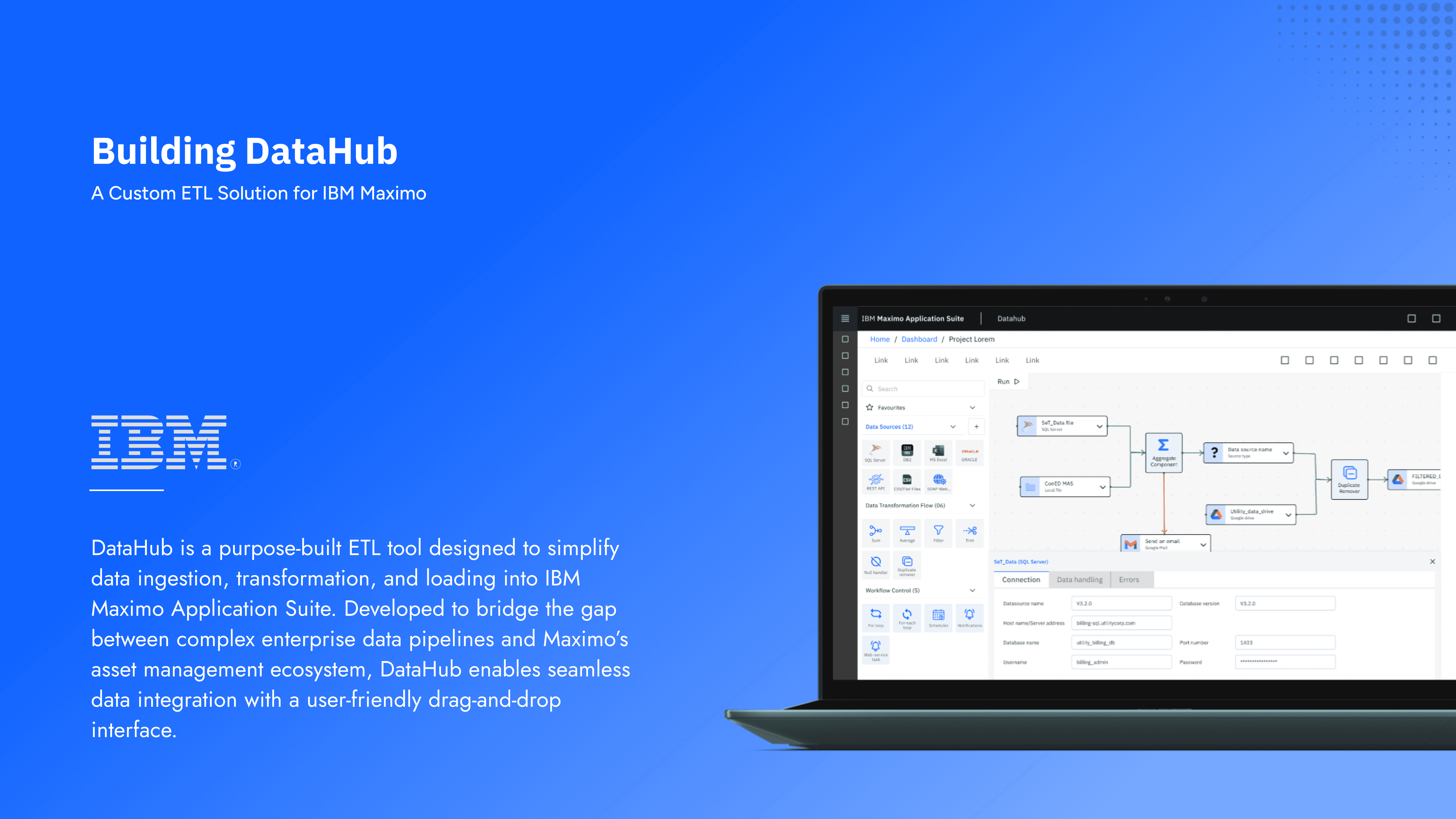
Led the UX design and user research for DataHub, an ETL tool designed to seamlessly integrate with IBM Maximo, optimizing data migration, transformation, and loading processes.
Led the UX design and user research for DataHub, an ETL tool designed to seamlessly integrate with IBM Maximo, optimizing data migration, transformation, and loading processes.
What I did
What I did
Worked cross-functionally with developers, product managers, and Maximo experts to bridge the gap between complex data workflows and user-friendly design.
Worked cross-functionally with developers, product managers, and Maximo experts to bridge the gap between complex data workflows and user-friendly design.
How I did it
Led the UX design and user research for DataHub, an ETL tool designed to seamlessly integrate with IBM Maximo, optimizing data migration, transformation, and loading processes.
What I did
Worked cross-functionally with developers, product managers, and Maximo experts to bridge the gap between complex data workflows and user-friendly design.
How I did it
How I did it
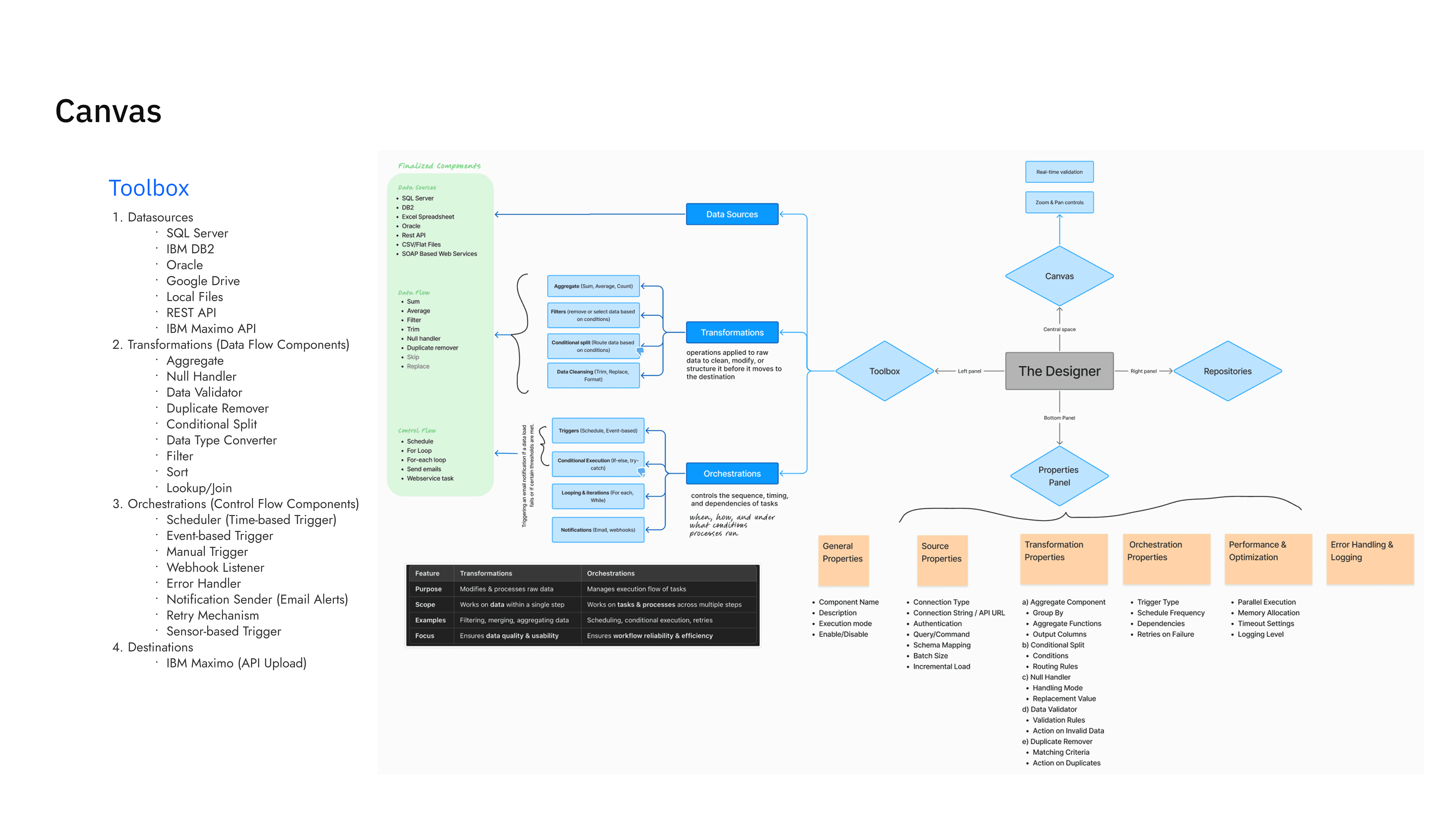
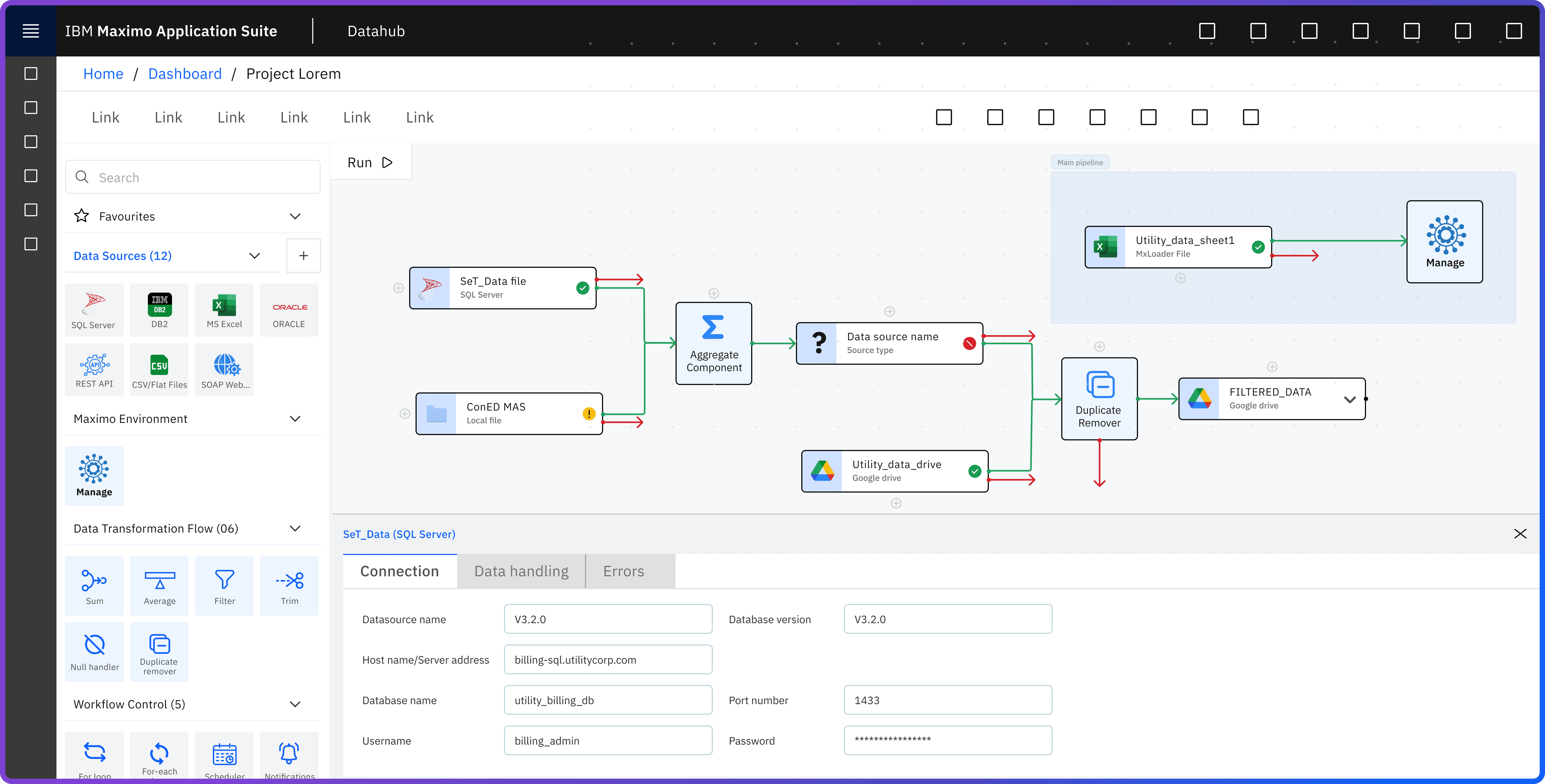
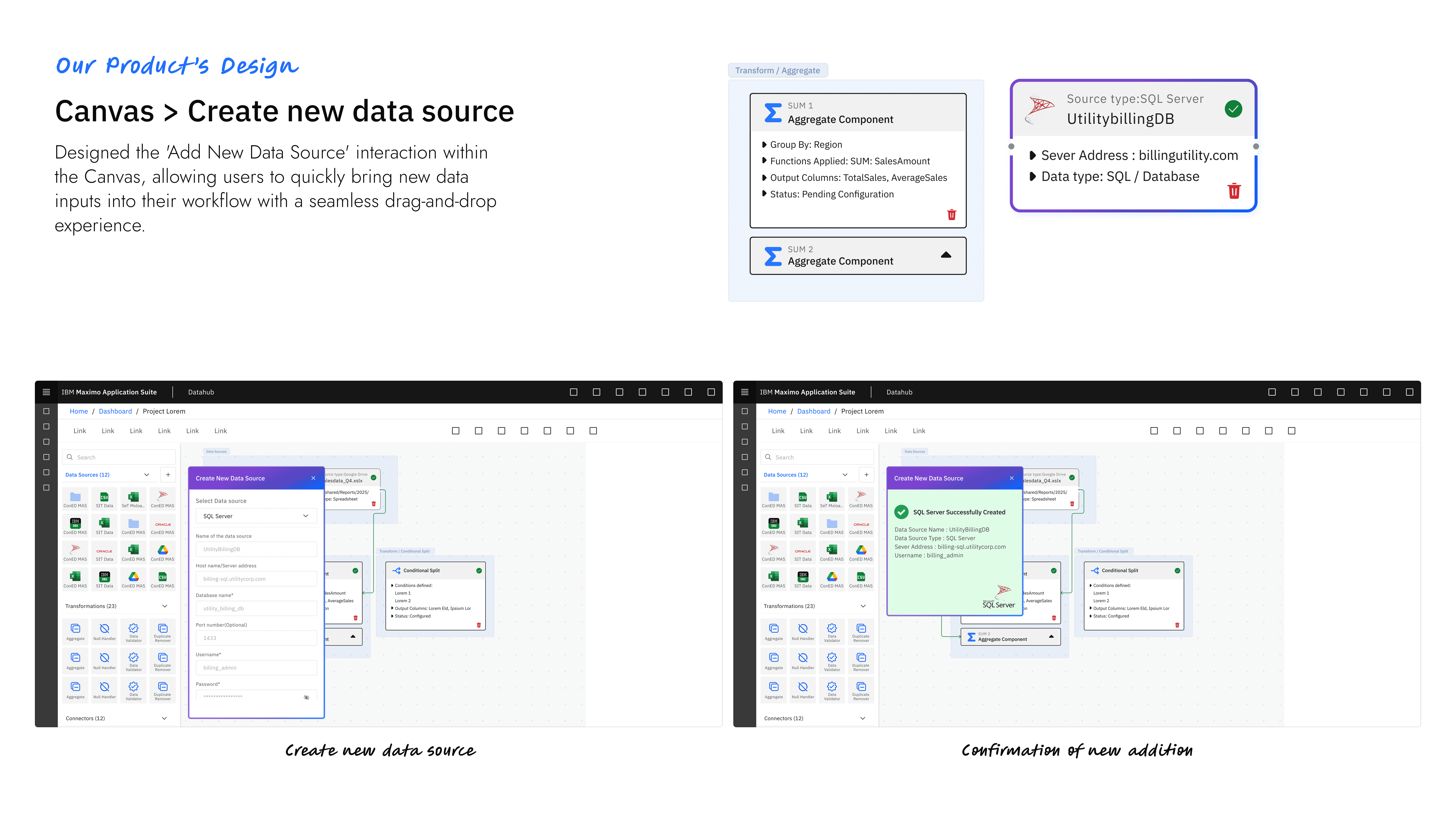
Designed and iterated on intuitive drag-and-drop data pipeline building, making it easier for users to manage large-scale data operations.
Product Vision
Empower industries with intelligent data solutions, enabling seamless integration, automation, and AI-driven insights that optimize operations, enhance decision-making, and drive digital transformation at scale.
Visual ETL
Secure Pipelines
Dynamic Mapping
Maximo Ready
Automated Flows
Data Integrity
Scalable Design
Seamless Sync
Smart Data Mapping
Smart Data Mapping
Automatically detect and align source-to-destination fields to reduce manual configuration.
Automatically detect and align source-to-destination fields to reduce manual configuration.
Visual Pipeline Builder
Visual Pipeline Builder
Design and orchestrate complex ETL workflows with an intuitive drag-and-drop interface.
Design and orchestrate complex ETL workflows with an intuitive drag-and-drop interface.
Connection Manager
Connection Manager
Securely connect to multiple data sources and destinations, including IBM Maximo, with reusable credentials.
Securely connect to multiple data sources and destinations, including IBM Maximo, with reusable credentials.
Real-Time Validation
Real-Time Validation
Instantly preview and validate data before loading to prevent errors and ensure data integrity.
Instantly preview and validate data before loading to prevent errors and ensure data integrity.
MAS Datahub
DataHub is more than just a data loading tool—it streamlines enterprise data management within Maximo, ensuring efficiency, accuracy, and ease of use for asset-intensive industries. By simplifying data transformation and integration, it empowers teams to make informed decisions while reducing operational overhead
*Interact with the stepper below
1
PROBLEM
2
ATTEMPT
3
INSIGHT
4
DECISION
5
RESULT
PROBLEM
Engineers couldn't connect data sources without knowing how Maximo works
IBM Maximo's data pipeline had no standard onboarding path. Every integration was a bespoke, tribal-knowledge effort.
QUESTIONS THE TEAM WAS STUCK ON
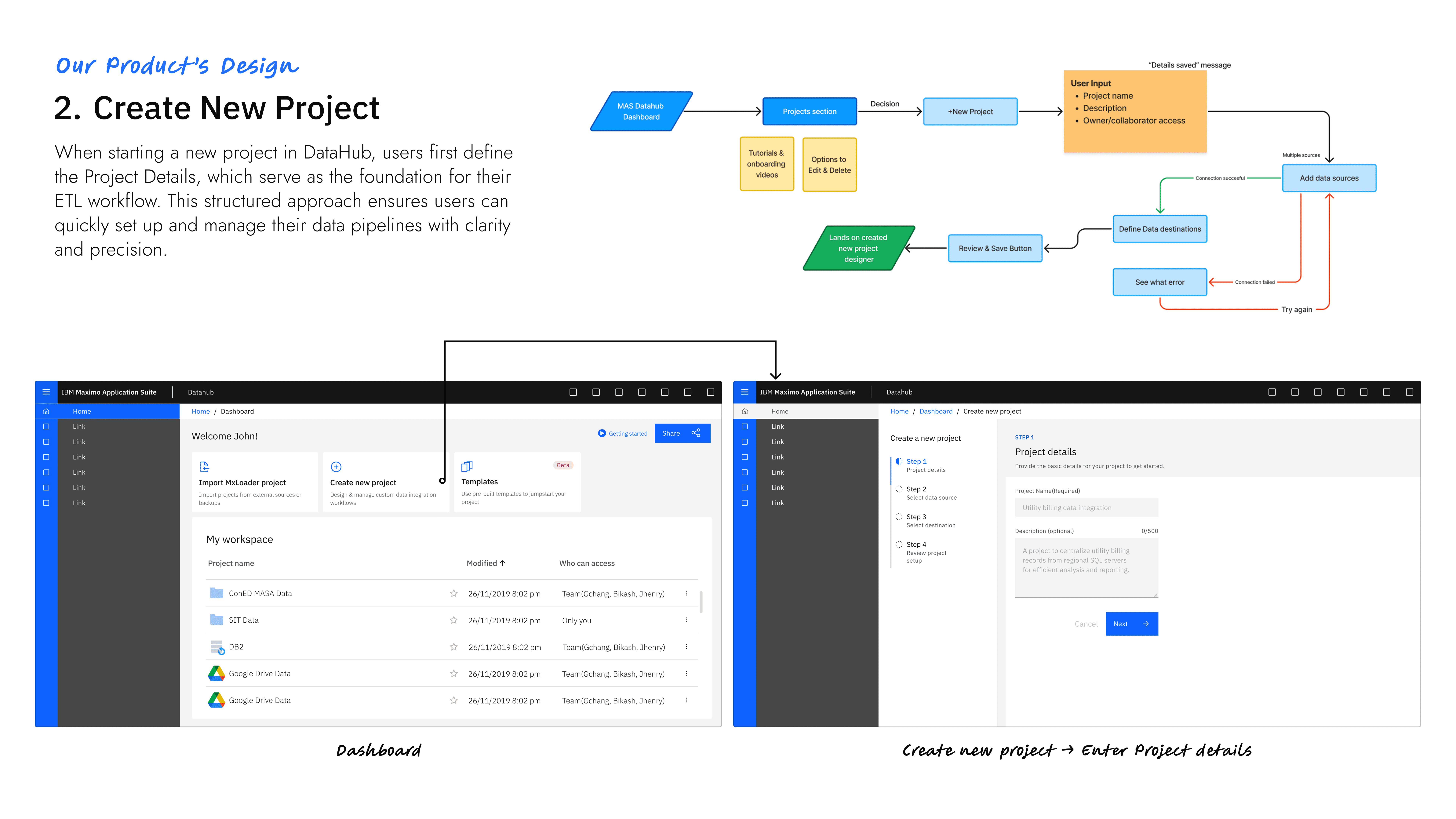
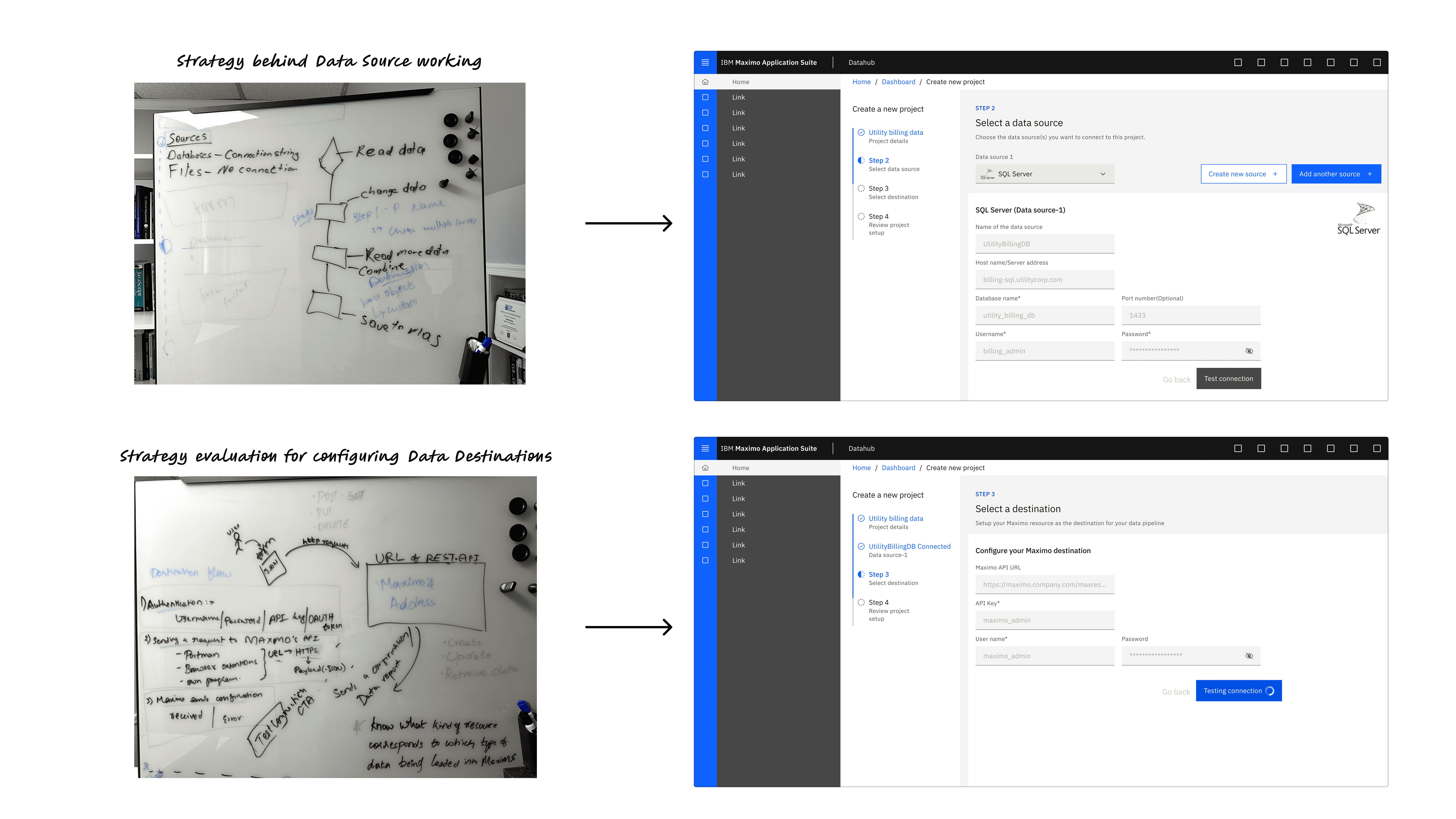
How do users specify where data should land in Maximo?
What sources can connect to Maximo, and what credentials do they need?
What's the minimum a user needs to know before a pipeline can be created?

Evidence (How I Work)
Trade-offs (What I cut + why)
Trade-offs (What I cut + why)
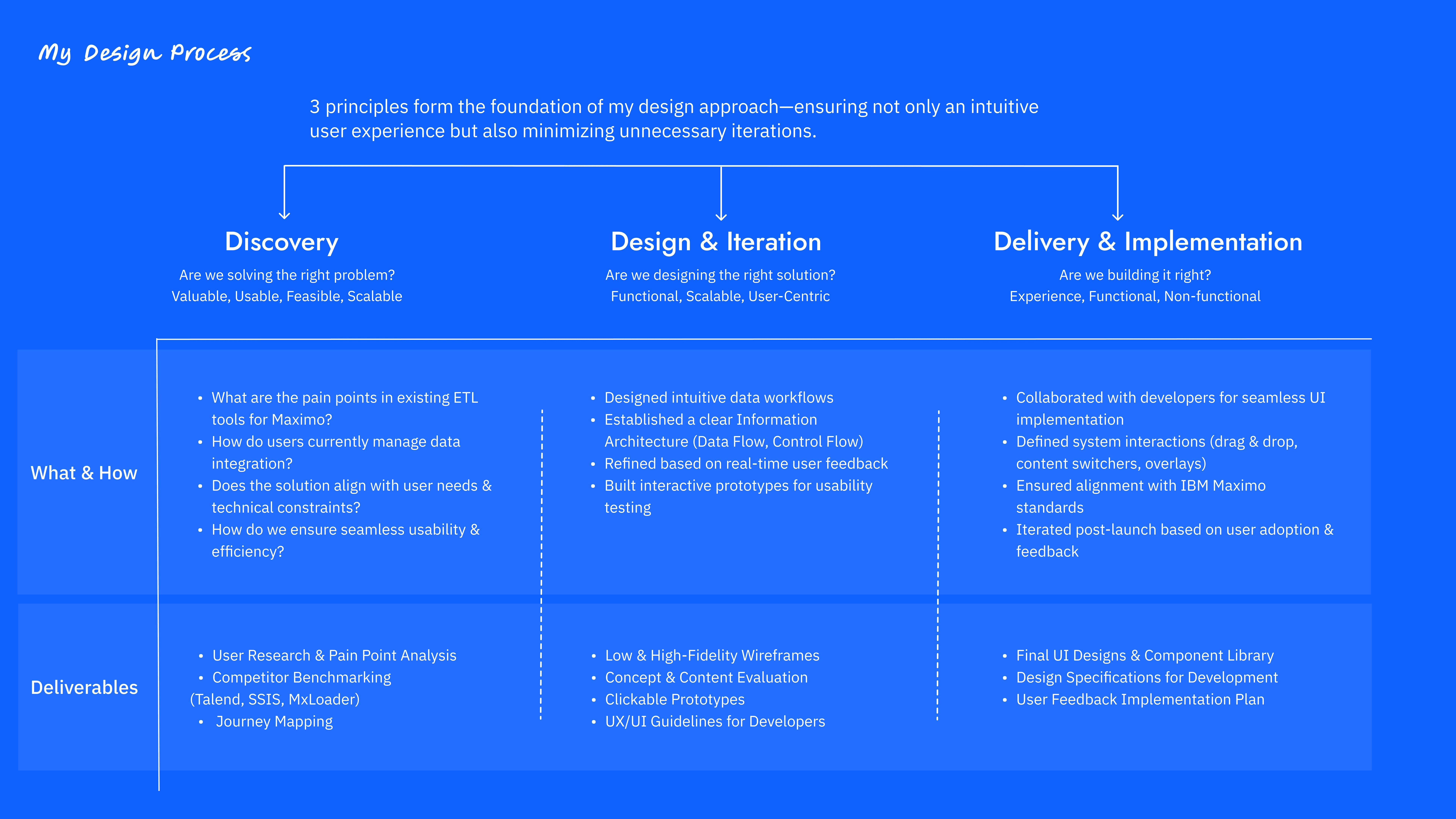
Prioritized intuitive drag-and-drop ETL workflows over exposing full technical configurability → reduced user cognitive load while preserving advanced capability.
Prioritized intuitive drag-and-drop ETL workflows over exposing full technical configurability → reduced user cognitive load while preserving advanced capability.
Chose modular interface patterns instead of monolithic dashboards → enabled faster onboarding for new users and clearer paths for expert workflows without bloating screens.
Chose modular interface patterns instead of monolithic dashboards → enabled faster onboarding for new users and clearer paths for expert workflows without bloating screens.
Complexity → Clarity
Complexity → Clarity
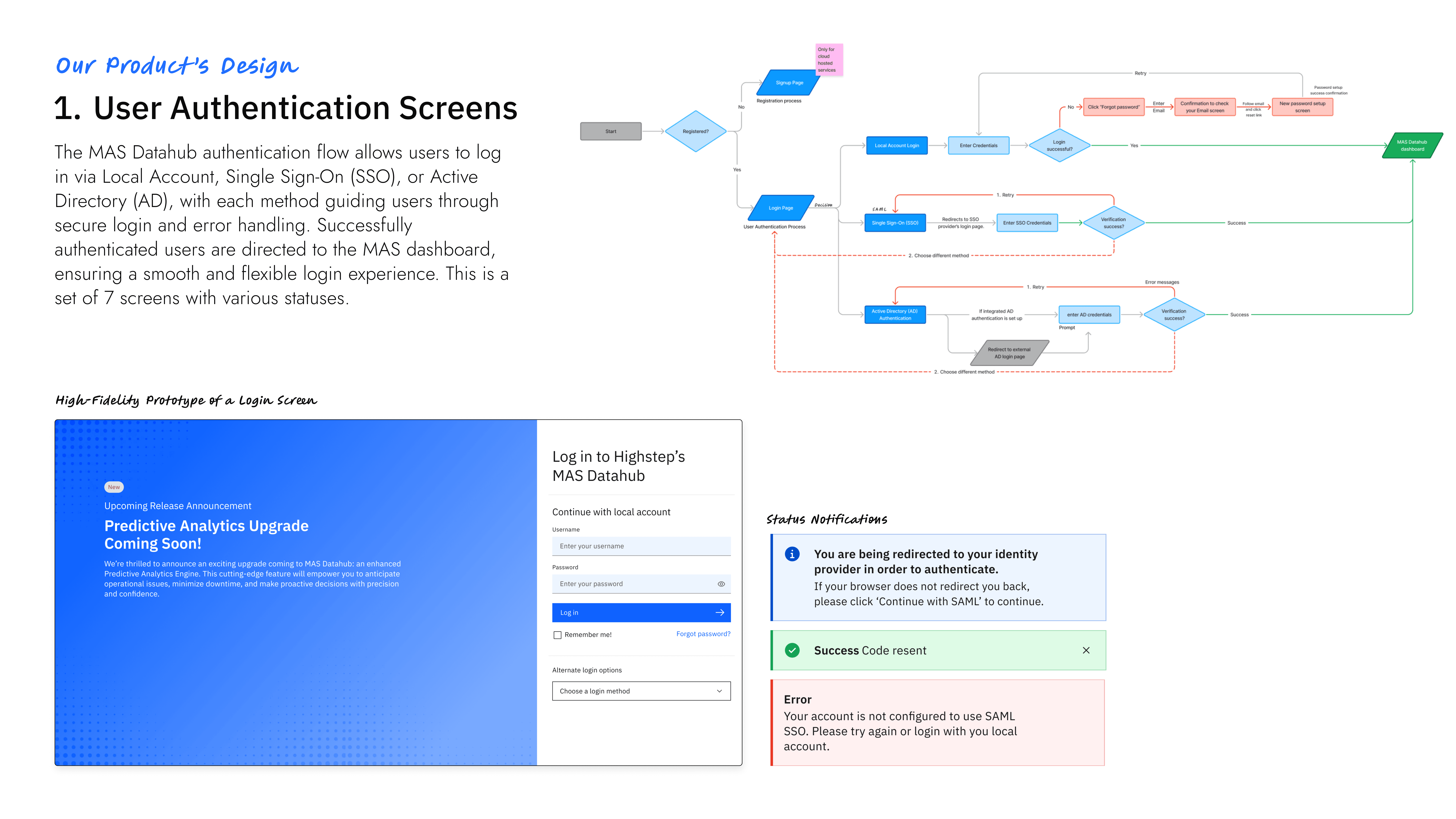
Translated complex enterprise ETL and Maximo integration logic into digestible UX building blocks (smart mapping, validation feedback, reusable connections).
Translated complex enterprise ETL and Maximo integration logic into digestible UX building blocks (smart mapping, validation feedback, reusable connections).
Designed real-time feedback loops (visual validation) to surface errors and data integrity issues proactively, shifting the tool from reactive to predictive.
Designed real-time feedback loops (visual validation) to surface errors and data integrity issues proactively, shifting the tool from reactive to predictive.
Ambiguity (When the brief wasn’t clear)
Ambiguity (When the brief wasn’t clear)
Defined what “user success” meant for data engineers vs. business analysts early on establishing differentiation in workflows rather than assuming a one-size-fits-all experience.
Defined what “user success” meant for data engineers vs. business analysts early on establishing differentiation in workflows rather than assuming a one-size-fits-all experience.
Clarified technical constraints around Maximo data schemas and API limits with engineering early, preventing late-stage rework.
Clarified technical constraints around Maximo data schemas and API limits with engineering early, preventing late-stage rework.
Systems Thinking (Upstream + downstream impact)
Systems Thinking (Upstream + downstream impact)
Mapped end-to-end data movement from source ingestion through Maximo population to ensure UI decisions didn’t inadvertently introduce data quality gaps or bottlenecks.
Mapped end-to-end data movement from source ingestion through Maximo population to ensure UI decisions didn’t inadvertently introduce data quality gaps or bottlenecks.
Anticipated edge cases in secure connections and data validation so that the UI reduced support load and aligned with enterprise security requirements.
Anticipated edge cases in secure connections and data validation so that the UI reduced support load and aligned with enterprise security requirements.
How I’ve Changed
How I’ve Changed
Shifted from designing screen flows to designing decision systems creating patterns that help humans act reliably within complex technical constraints
Shifted from designing screen flows to designing decision systems creating patterns that help humans act reliably within complex technical constraints
Grew more comfortable balancing deep domain complexity with approachable user experiences, especially in data-heavy enterprise environments that resist simplification.
Grew more comfortable balancing deep domain complexity with approachable user experiences, especially in data-heavy enterprise environments that resist simplification.